


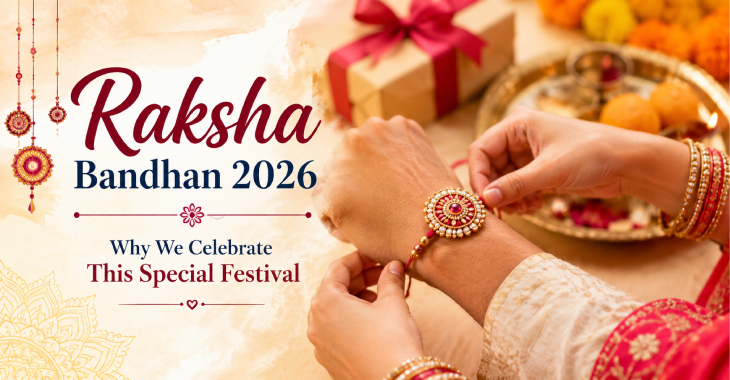
Raksha Bandhan is one of India’s most cherished festivals, celebrating the beautiful bond between brothers and sisters. Every year, families come together to mark this occasion with prayers, rituals, gifts, sweets, and heartfelt wishes. More than a traditional festival, Raksha Bandhan represents love, trust, care, responsibility, and the lifelong connection shared between siblings.
In 2026, Raksha Bandhan will once again bring families together to celebrate this special relationship. While the customs may vary across different regions of India, the central message remains the same: celebrating the bond of affection and protection between siblings.
What Is Raksha Bandhan?
Raksha Bandhan, often simply called Rakhi, is a Hindu festival traditionally celebrated on the full moon day, or Purnima, of the Hindu month of Shravan. The word “Raksha Bandhan” means a bond of protection.
The most recognizable ritual involves a sister tying a sacred thread, known as a rakhi, around her brother’s wrist. The brother traditionally promises to protect and support his sister, while the sister offers prayers for his health, happiness, and prosperity.
Today, the meaning of Raksha Bandhan has evolved beyond a one-sided promise of protection. Brothers and sisters increasingly view it as a mutual commitment to stand by each other through life’s challenges.
Why Do We Celebrate Raksha Bandhan?
The primary reason for celebrating Raksha Bandhan is to honor the emotional connection between siblings. Life can take brothers and sisters to different cities, countries, careers, and stages of life, but the festival provides an opportunity to reconnect.
The rakhi itself is symbolic. It represents affection, responsibility, trust, and the promise that siblings will support each other. The festival also reminds families of the importance of maintaining relationships in an increasingly busy and fast-changing world.
For many families, Raksha Bandhan is not only about exchanging gifts. It is a day to spend quality time together, remember childhood memories, share meals, and express feelings that may not always be spoken openly.
Historical and Mythological Significance
Raksha Bandhan has several stories and traditions associated with it. One of the best-known stories comes from Hindu mythology and involves Lord Krishna and Draupadi.
According to a popular traditional account, when Krishna injured his finger, Draupadi tore a piece of cloth from her saree and tied it around his finger to stop the bleeding. Krishna is believed to have appreciated her gesture and promised to protect her whenever she needed him.
The story is often remembered as an example of the emotional meaning behind the festival: even a simple act of care can create a powerful bond of love and responsibility.
Another widely known historical tradition connects Raksha Bandhan with Rajput communities, where women are said to have sent rakhis as symbols of friendship and protection to rulers and warriors.
These stories have contributed to the festival’s broader cultural significance, although practices and interpretations have varied across different periods and regions.
The Traditional Raksha Bandhan Ritual
Raksha Bandhan celebrations usually begin with the preparation of a puja thali. Depending on family traditions, it may contain a rakhi, roli or kumkum, rice grains, diya, sweets, and other पूजा items.
The sister applies a tilak on her brother’s forehead and performs an aarti. She then ties the rakhi around his wrist and offers prayers for his well-being. The brother gives his sister a gift and traditionally promises to protect and support her.
Families then exchange sweets and enjoy a festive meal together.
While these rituals remain important, modern celebrations have become more flexible. Some siblings living far apart send rakhis and gifts through courier services, while others celebrate through video calls when they cannot meet personally.
Raksha Bandhan Across India
Although Raksha Bandhan is celebrated throughout India, regional customs differ.
In northern and central parts of India, the festival is widely associated with tying rakhis, exchanging gifts, and family gatherings.
In Maharashtra, the day coincides with Nariyal Purnima, a festival traditionally associated with coconut offerings and communities connected with the sea.
In parts of western India, the festival is also connected with Pavitropana, a religious observance associated with Lord Shiva.
In Nepal and some other regions of South Asia, related traditions are observed under different names and with distinct customs.
These regional variations demonstrate India’s diverse cultural heritage while maintaining the common theme of relationships, blessings, and goodwill.
How Raksha Bandhan Has Changed
Like many Indian festivals, Raksha Bandhan has evolved with changing lifestyles.
Traditionally, siblings living in the same household or nearby communities could celebrate together. Today, brothers and sisters may live thousands of kilometres apart because of education, employment, marriage, or international careers.
Technology has helped bridge this distance. Video calls, online gift deliveries, digital greetings, and e-commerce platforms allow siblings to participate even when physical travel is not possible.
The festival has also become more inclusive. Many siblings now see Raksha Bandhan as a celebration of mutual care rather than only a brother’s responsibility to protect his sister.
This modern interpretation reflects changing family relationships and the growing recognition that emotional support, respect, and protection should work both ways.
Rakhi: More Than Just a Thread
The rakhi may look like a simple decorative thread, but its emotional value is much greater.
For some people, it represents childhood memories. For others, it symbolizes a promise to remain connected despite distance. A handmade rakhi may carry even greater sentimental value because of the time and effort invested in creating it.
Today, people can find rakhis made from traditional threads, beads, silk, eco-friendly materials, personalized photographs, and other creative designs.
Many families are also choosing sustainable rakhis made from natural or biodegradable materials. This adds an environmental dimension to the celebration while preserving its traditional essence.
Celebrating Raksha Bandhan Meaningfully in 2026
Raksha Bandhan 2026 can be an opportunity to make the celebration more meaningful rather than focusing only on material gifts.
Siblings can spend the day together, cook a favorite meal, revisit childhood photographs, or simply talk about their lives and future plans. Those living apart can arrange a virtual celebration and send personalized gifts or handwritten letters.
Families can also use the occasion to support charitable causes, distribute sweets to people in need, plant trees, or choose environmentally friendly decorations.
The most valuable gift, however, remains time and attention. A thoughtful conversation or a simple expression of gratitude can mean more than an expensive present.
The Deeper Message of Raksha Bandhan
At its heart, Raksha Bandhan is about relationships. It reminds us that family bonds require love, understanding, respect, and effort.
The festival also highlights an important aspect of Indian culture: relationships are celebrated through rituals that connect generations. Parents and grandparents pass traditions to younger family members, helping preserve cultural values while allowing those traditions to evolve.
For younger generations, Raksha Bandhan can therefore be both a cultural celebration and an opportunity to understand the importance of family connections.
Conclusion
Raksha Bandhan 2026 will be more than a day of tying rakhis and exchanging gifts. It will be an opportunity for brothers and sisters to celebrate years of shared memories, affection, laughter, disagreements, support, and companionship.
While the traditional ritual remains at the heart of the festival, its meaning continues to evolve. Today, Raksha Bandhan represents mutual respect, emotional support, love, responsibility, and an enduring family bond.
As families celebrate the festival in different ways, the message remains timeless: no matter how far life takes siblings, the bond they share can remain a source of strength, comfort, and happiness.
Read More
Independence Day 2026: Theme, History and What to Expect on August 15
Top 10 Pharmaceutical Startups Revolutionizing Healthcare