


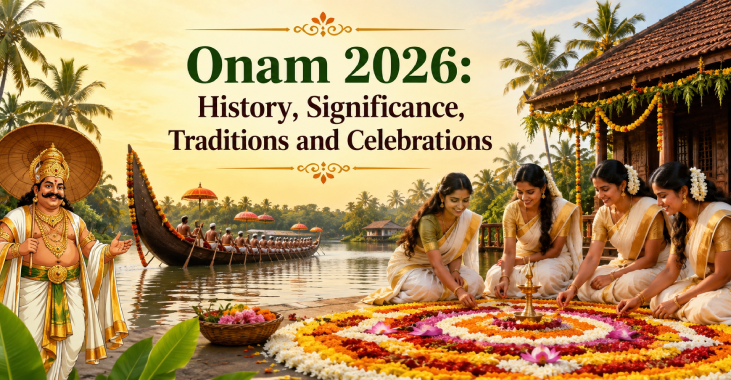
Onam is one of Kerala’s most celebrated festivals, bringing together people across communities in a vibrant celebration of culture, tradition, prosperity, and togetherness. Known as the harvest festival of Kerala, Onam is celebrated with colourful flower arrangements, traditional feasts, cultural performances, boat races, games, and family gatherings.
In 2026, Onam will once again fill Kerala and Malayali communities around the world with festive energy. More than a religious celebration, Onam represents Kerala’s rich cultural heritage and the spirit of unity. From the legendary story of King Mahabali to the grand Onam Sadya, every tradition associated with the festival carries a special meaning.
When Is Onam 2026 Celebrated?
Onam is celebrated over several days, with Thiruvonam being the most important day of the festival. The date changes each year because Onam follows the Malayalam calendar and is associated with the Thiruvonam nakshatra during the month of Chingam.
In 2026, Thiruvonam falls on August 26. The celebrations, however, extend beyond a single day, with different rituals and cultural activities taking place throughout the festival period.
Families begin preparations days in advance by cleaning and decorating their homes, shopping for traditional clothes and ingredients, preparing flower decorations, and planning festive gatherings.
The History and Legend Behind Onam
The most popular legend associated with Onam is the story of King Mahabali, a beloved ruler who is remembered for his generosity, kindness, and commitment to his people.
According to Hindu mythology, Mahabali was an Asura king whose reign was considered a golden age. His kingdom was believed to be prosperous and peaceful, and people were treated equally. His growing popularity and influence eventually concerned the gods.
Lord Vishnu appeared before Mahabali in the form of a dwarf Brahmin named Vamana. Vamana asked the king for as much land as he could cover in three steps. Mahabali agreed to the request.
Vamana then expanded into a gigantic form. With his first step, he covered the earth, and with his second, he covered the heavens. Having nowhere left for the third step, Mahabali offered his own head. Vishnu placed his foot on the king’s head and sent him to the underworld.
However, impressed by Mahabali’s humility and devotion, Vishnu granted him permission to visit his people once every year. Onam is traditionally associated with this annual homecoming of King Mahabali.
The legend helps explain why Onam is celebrated as a festival of happiness, equality, prosperity, and social harmony.
Cultural Significance of Onam
Onam holds a special place in Kerala’s cultural identity. It celebrates the harvest season while bringing families, friends, and communities together.
The festival reflects values such as generosity, equality, hospitality, and unity. During Onam, people traditionally put aside differences and participate in celebrations together.
The festival also showcases Kerala’s artistic heritage. Traditional dance, music, games, costumes, decorations, and food are all important elements of Onam celebrations.
For Malayalis living outside Kerala, Onam provides an opportunity to reconnect with their cultural roots and pass traditions on to younger generations.
Major Onam Traditions
1. Pookalam

One of the most recognizable symbols of Onam is the Pookalam, a decorative floral arrangement created at the entrance of homes.
Families traditionally collect flowers and arrange them in colourful circular patterns. In many places, Pookalam competitions are also organized, with participants creating elaborate designs using different flowers.
The tradition adds colour and beauty to the celebrations and is often enjoyed as a family and community activity.
2. Onam Sadya

No Onam celebration is complete without the famous Onam Sadya. It is a traditional vegetarian feast served on a banana leaf.
A Sadya can include numerous dishes, such as rice, sambar, avial, thoran, olan, pachadi, kichadi, pickles, papad, and different varieties of payasam.
The meal is not simply about food. It represents Kerala’s culinary heritage and the importance of sharing. Families and communities often sit together to enjoy the feast, making it one of the highlights of the festival.
3. Vallam Kali

Vallam Kali, or traditional snake boat racing, is another major attraction associated with Onam.
Long, narrow boats carrying large teams of rowers compete in thrilling races on Kerala’s rivers and backwaters. The rhythmic rowing, traditional songs, cheering crowds, and decorated boats create a spectacular atmosphere.
The races also reflect the importance of teamwork and community participation in Kerala’s cultural traditions.
4. Traditional Clothing

During Onam, many people wear traditional Kerala attire. Women commonly wear Kasavu sarees, while men may wear mundu paired with traditional shirts or kurtas.
Wearing traditional clothing adds to the festive atmosphere and helps preserve Kerala’s distinctive cultural identity.
5. Pulikali
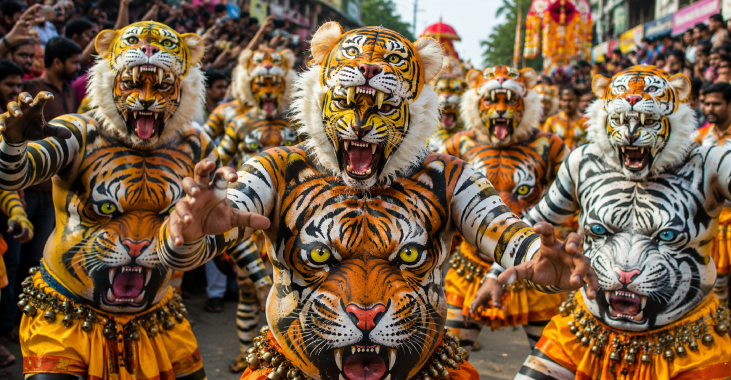
Pulikali, meaning “tiger dance,” is a colourful folk performance associated with Onam celebrations, particularly in parts of Kerala.
Performers paint their bodies with tiger-like patterns and dance to traditional percussion music. The energetic performance attracts large crowds and demonstrates the playful side of Kerala’s folk culture.
6. Onam Games
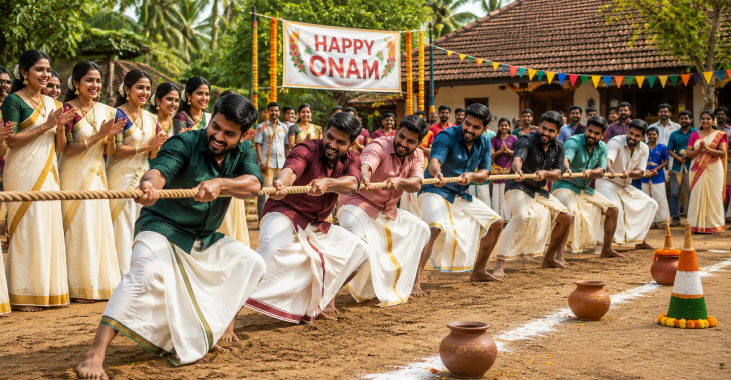
Traditional games are another important part of the festival. Communities organize a variety of activities, including tug-of-war and other traditional competitions.
These games encourage participation across generations and reinforce the festival’s message of togetherness.
How Onam Is Celebrated Today
While traditional customs remain central to Onam, celebrations have evolved with changing lifestyles. Homes, schools, workplaces, cultural organizations, and communities organize their own Onam programmes.
In cities outside Kerala, Malayali associations frequently conduct cultural events featuring dance, music, Pookalam competitions, Sadya, and traditional games.
Digital platforms have also changed the way people celebrate. Families separated by distance can connect through video calls, while social media allows people to share photographs, greetings, recipes, and cultural performances.
Businesses and organizations also mark Onam with festive events, traditional dress days, cultural programmes, and special offers.
The Message of Unity and Togetherness
One of the most meaningful aspects of Onam is its emphasis on togetherness. The festival brings people together regardless of age, profession, or social background.
The story of Mahabali is often interpreted as a reminder of an ideal society where people lived with happiness and equality. The communal nature of the Sadya, group celebrations, cultural performances, and traditional games further reinforces this message.
In a rapidly changing world, Onam continues to provide an opportunity for people to slow down, reconnect with family, celebrate their heritage, and appreciate the importance of community.
Onam 2026: Celebrating Tradition in a Modern World
As Onam 2026 arrives, the festival will continue to combine age-old traditions with contemporary celebrations. From beautifully designed Pookalams and grand Sadya meals to cultural programmes and community gatherings, the festival remains an important part of Kerala’s identity.
For those visiting Kerala during the season, Onam offers an opportunity to experience the state’s traditions, cuisine, performing arts, and community spirit. For Malayalis around the world, it is a chance to celebrate their roots and share their culture with others.
Ultimately, Onam is more than a harvest festival. It is a celebration of heritage, prosperity, friendship, family, and unity. Its enduring appeal lies in its ability to connect generations while keeping Kerala’s cultural traditions alive.
As families gather, flowers decorate doorways, boats race across Kerala’s waterways, and banana leaves are filled with festive delicacies, the spirit of Onam once again reminds everyone of the joy that comes from celebrating together.
Read More
Independence Day 2026: Theme, History and What to Expect on August 15
Top 10 Pharmaceutical Startups Revolutionizing Healthcare