


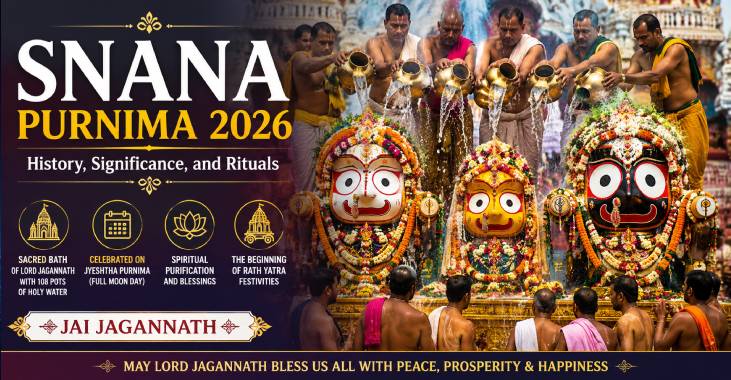
Snana Purnima, also known as Snana Yatra or the Deva Snana Purnima, is one of the most sacred festivals dedicated to Lord Jagannath. Celebrated on the full moon day (Purnima) of the Hindu month of Jyeshtha, this festival marks the ceremonial bathing of Lord Jagannath, Lord Balabhadra, Devi Subhadra, and Sudarshana Chakra with 108 sacred pots of fragrant water.
The festival is of immense spiritual significance, especially in Puri, Odisha, where millions of devotees gather at the Jagannath Temple to witness the grand ceremony. Snana Purnima also marks the beginning of the annual Rath Yatra celebrations, making it one of the most anticipated events in the Jagannath tradition.
In 2026, devotees worldwide will celebrate Snana Purnima with devotion, prayers, and rituals, seeking the blessings of Lord Jagannath for health, happiness, prosperity, and spiritual growth.
What is Snana Purnima?
The word “Snana” means bath, while “Purnima” means the full moon day. Therefore, Snana Purnima literally means the sacred bathing festival celebrated on the full moon day.
On this auspicious occasion, the deities of Lord Jagannath, Lord Balabhadra, Devi Subhadra, and Sudarshana are brought out from the sanctum sanctorum of the Jagannath Temple to the Snana Mandap, a beautifully decorated bathing platform.
This is one of the very few occasions during the year when devotees can have a close public viewing (Darshan) of the deities before the Rath Yatra.
Historical Background
The origins of Snana Purnima date back several centuries and are deeply rooted in ancient Hindu scriptures and the traditions of the Jagannath cult.
According to temple traditions, King Indradyumna, the legendary founder of the Jagannath Temple, initiated the ceremonial bathing festival after installing the wooden deities.
The Skanda Purana and other sacred texts mention ceremonial bathing of deities as an act of purification and divine celebration. Over time, this evolved into one of the grandest festivals in the Jagannath tradition.
For centuries, the rituals have remained largely unchanged, preserving Odisha’s rich spiritual and cultural heritage.
Why is Snana Purnima Celebrated?
Snana Purnima symbolizes:
- Purification
- Devotion
- Renewal
- Divine blessings
- Preparation for Rath Yatra
The ceremonial bath signifies cleansing of both body and soul.
Devotees believe that witnessing the sacred bath washes away sins and grants divine blessings.
The festival also reminds devotees that even the Supreme Lord participates in human-like activities, strengthening the emotional bond between God and devotees.
The Sacred Rituals of Snana Purnima
1. Collection of Holy Water
The rituals begin early in the morning.
Water is collected from the Suna Kua (Golden Well) located inside the Jagannath Temple complex.
The well remains specially reserved for the annual bathing ceremony.
Exactly 108 pitchers (Kalashas) of holy water are drawn.
The water is mixed with:
- Sandalwood paste
- Camphor
- Flowers
- Fragrant herbs
- Sacred perfumes
2. Pahandi Procession
The deities are carried from the sanctum to the Snana Mandap in a ceremonial procession called Pahandi.
Temple servitors gently sway the deities while chanting:
“Jai Jagannath”
The entire atmosphere becomes vibrant with:
- Conch shells
- Cymbals
- Temple drums
- Devotional songs
- Vedic chants
Thousands of devotees gather to witness this magnificent procession.
3. The Grand Bathing Ceremony
This is the main event.
The four deities receive a ceremonial bath using 108 pots of sacred water.
Each pitcher is poured while priests chant Vedic mantras.
The ritual represents:
- Purification
- Blessings for humanity
- Universal peace
- Prosperity
The bathing ceremony lasts for several hours.
4. Hati Besha (Elephant Attire)
After the bathing ritual, the deities are beautifully decorated in the famous Hati Besha.
In this special attire:
- Lord Jagannath appears as Lord Ganesha.
- Lord Balabhadra and Devi Subhadra are also adorned with unique decorations.
The elephant attire symbolizes wisdom, strength, and the removal of obstacles.
This is one of the most visually stunning moments of the festival.
5. Anasara Period
Following the grand bath, the deities are believed to develop a fever due to the ceremonial bathing.
As a result, they retire from public view for approximately 15 days.
This period is called Anasara.
During this time:
- Ayurvedic medicines are offered.
- Herbal preparations are served.
- The deities rest.
- Temple rituals continue privately.
Devotees cannot have darshan during this period.
6. Nabayouvana Darshan
After recovery, the deities appear in youthful form.
This is known as Nabayouvana Darshan, meaning “the appearance of renewed youth.”
Devotees eagerly wait for this darshan before Rath Yatra.
Spiritual Significance
Snana Purnima teaches several spiritual values.
Purification
Just as the deities receive a ceremonial bath, devotees are encouraged to purify their hearts through prayer and righteous living.
Humility
Despite being the Supreme Lord, Jagannath participates in human-like activities, teaching humility.
Compassion
The Lord blesses all equally without discrimination.
Renewal
The festival reminds us to renew our thoughts, actions, and devotion.
Importance in Jagannath Culture
Snana Purnima is considered the formal beginning of the annual Rath Yatra festivities.
Without Snana Purnima:
- There is no Anasara.
- No Nabayouvana Darshan.
- No Rath Yatra.
Therefore, it forms an essential part of the Jagannath calendar.
Snana Purnima in Puri
The celebrations at the Jagannath Temple in Puri attract lakhs of pilgrims from India and abroad.
The temple is decorated with:
- Flowers
- Traditional fabrics
- Sacred flags
- Lamps
The city resonates with:
- Bhajans
- Kirtans
- Temple bells
- Devotional music
Pilgrims often arrive days in advance to witness the festival.
Rituals Observed by Devotees
Many devotees observe:
- Early morning bath
- Fasting
- Chanting “Jai Jagannath”
- Reading Jagannath scriptures
- Charity
- Feeding the poor
- Visiting Jagannath temples
- Offering fruits and sweets
- Singing devotional songs
These acts are believed to bring spiritual merit and divine grace.
Special Offerings
Popular offerings include:
- Fruits
- Coconut
- Banana
- Khaja
- Chhena sweets
- Poda Pitha
- Sweet rice
- Tulsi leaves
- Sandal paste
After offering them to the Lord, devotees receive Mahaprasad, considered highly sacred.
Snana Purnima and Rath Yatra
The festival directly leads to Rath Yatra.
The sequence is:
- Snana Purnima
- Anasara
- Nabayouvana Darshan
- Rath Yatra
Each event has unique spiritual significance and together they form one continuous divine celebration.
Celebrations Beyond Puri
Jagannath temples across India and around the world celebrate Snana Purnima with devotion.
Countries where the festival is observed include:
- India
- United States
- United Kingdom
- Canada
- Australia
- Singapore
- Malaysia
Devotees organize:
- Abhishekam
- Bhajans
- Kirtans
- Cultural programs
- Spiritual discourses
- Community feasts
This reflects the growing global devotion to Lord Jagannath.
Lessons from Snana Purnima
The festival inspires devotees to:
- Live with humility.
- Practice compassion.
- Embrace purity.
- Strengthen faith.
- Serve society.
- Respect traditions.
- Remain grateful.
- Prepare spiritually for life’s journey.
Its message transcends rituals, encouraging inner transformation and devotion.
Environmental and Cultural Relevance
Many temples now promote eco-friendly celebrations by:
- Using natural flowers.
- Avoiding plastic decorations.
- Conserving water.
- Preparing biodegradable offerings.
- Supporting local artisans.
Such practices help preserve both the environment and the rich cultural heritage associated with the festival.
Tips for Devotees Visiting Puri
If you plan to attend Snana Purnima in Puri:
- Arrive a day or two early due to large crowds.
- Wear modest, comfortable clothing.
- Stay hydrated, as the weather is usually hot.
- Follow temple guidelines and security instructions.
- Respect local customs and traditions.
- Carry only essential belongings.
- Book accommodation well in advance.
A little planning ensures a smoother and more meaningful pilgrimage.
Conclusion
Snana Purnima is much more than a ceremonial bathing festival. It is a celebration of devotion, purity, renewal, and the loving relationship between Lord Jagannath and His devotees. The sacred rituals—from the collection of 108 pots of fragrant water and the grand bathing ceremony to the majestic Hati Besha and the contemplative Anasara period—carry profound spiritual meaning that has inspired generations.
As the gateway to the world-famous Rath Yatra, Snana Purnima occupies a unique place in the Jagannath tradition. It reminds us that true spirituality is found not only in rituals but also in humility, compassion, gratitude, and selfless service. Whether celebrated in Puri or in Jagannath temples around the world, the festival unites millions of devotees in prayer and devotion.
May Snana Purnima 2026 bring peace, good health, prosperity, and divine blessings to all. Jai Jagannath!
Read More
Top 10 AI Trends Transforming Businesses in 2026
Best IPL Matches That Changed Cricket History