


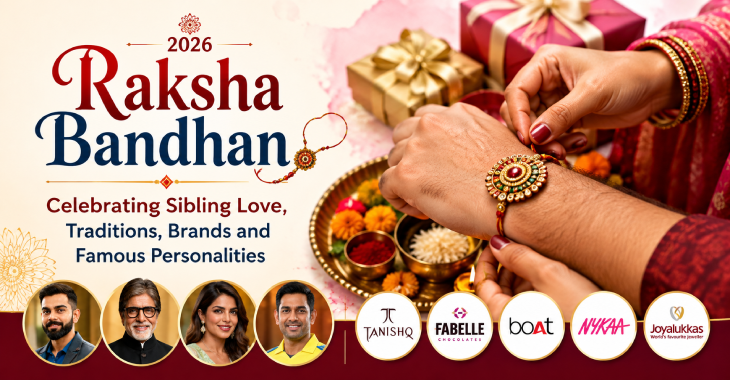
Raksha Bandhan 2026 is more than a festival marked by tying a rakhi. It is an emotional celebration of sibling love, childhood memories, family traditions, and the promise to remain connected through every stage of life.
In today’s digital age, Raksha Bandhan has also become an important occasion for brands, celebrities, creators, and businesses to connect with audiences through emotional storytelling, festive campaigns, gifting ideas, and social media conversations.
From e-commerce platforms such as Amazon, Flipkart and Myntra to jewellery and lifestyle brands such as Tanishq, Raksha Bandhan offers businesses an opportunity to become part of one of India’s most recognizable family celebrations.
What Is Raksha Bandhan?
Raksha Bandhan is traditionally celebrated by sisters and brothers. On this occasion, a sister ties a rakhi around her brother’s wrist and families exchange sweets, gifts, blessings, and good wishes.
Although the festival has traditionally emphasized the brother-sister relationship, modern celebrations are increasingly about mutual love, respect and emotional support between siblings.
For families separated by distance, technology has made the celebration easier. Video calls, online rakhi delivery, digital greetings, personalized gifts and online shopping allow siblings to celebrate even when they cannot meet in person.
Why Raksha Bandhan Matters to Brands
Festivals create a natural opportunity for brands to communicate with customers, but Raksha Bandhan is particularly powerful because of its emotional character.
People do not celebrate Raksha Bandhan simply by purchasing a product. They purchase or exchange something as a way of expressing affection.
This gives companies an opportunity to create campaigns around:
- Childhood memories
- Sibling relationships
- Family traditions
- Long-distance relationships
- Personalized gifting
- Emotional storytelling
- Festive discounts
- Social-media engagement
A campaign that tells a relatable story can often generate stronger engagement than a simple advertisement focused only on price.
Amazon and the Growth of Online Rakhi Shopping
Amazon has become one of the major names associated with online shopping in India. Around festivals, e-commerce platforms make it easier for customers to discover rakhis, sweets, gifts, electronics, fashion products and personalized items.
For siblings living in different cities, online shopping can also simplify the process of sending gifts directly to family members.
The broader trend shows how traditional festivals are adapting to digital commerce while maintaining their emotional significance.
Flipkart and India’s Digital Festive Shopping Culture
Flipkart is another major e-commerce name that can be relevant when discussing the changing nature of festive shopping.
Raksha Bandhan shoppers can explore numerous categories, from fashion and accessories to electronics and home products. For brands selling through online marketplaces, festivals provide an opportunity to create seasonal collections and promotional campaigns.
The combination of convenience, product variety and home delivery has changed how many Indian families prepare for celebrations.
Myntra: Fashion Meets Festive Celebrations
Raksha Bandhan is also an important occasion for festive fashion.
Myntra, as a major online fashion platform, represents the growing connection between Indian festivals and digital fashion shopping. Consumers increasingly look for ethnic wear, accessories, footwear and contemporary festive outfits for family celebrations.
For fashion companies, Raksha Bandhan content can combine styling inspiration with emotional storytelling, making the campaign useful for both brand awareness and product discovery.
Tanishq and the Emotional Side of Gifting
Jewellery has traditionally played an important role in Indian celebrations.
Tanishq is a prominent Indian jewellery brand and an example of how jewellery companies can position products around relationships, milestones and emotional occasions.
For Raksha Bandhan, jewellery campaigns can focus on the sentiment behind a gift rather than treating the product as merely a purchase.
The broader lesson for marketers is simple: the story behind a gift can be as important as the gift itself.
How Celebrities Influence Raksha Bandhan Conversations
Celebrities can also play an important role in increasing festival-related conversations online. Their family photographs, festive greetings and social-media posts often attract significant public attention.
Actors such as Amitabh Bachchan, Alia Bhatt, Varun Dhawan, Sara Ali Khan, and Priyanka Chopra Jonas have large digital audiences, making celebrity-led festival content particularly visible.
However, brands should be careful to distinguish between a celebrity’s personal festival post and an official commercial endorsement. Using a celebrity’s name for SEO should never imply a partnership unless one actually exists.
Amitabh Bachchan and Generational Appeal
Amitabh Bachchan represents a connection between generations of Indian audiences. His long-standing popularity demonstrates why family-oriented cultural themes can resonate with both younger and older audiences.
For publishers and brands, the broader lesson is that festival content can become more engaging when it connects traditional values with stories that today’s audiences understand.
Alia Bhatt and the New Generation
Alia Bhatt represents a younger generation of Indian entertainment audiences. Modern celebrities like her demonstrate how traditional occasions can be communicated through contemporary digital platforms.
For brands targeting younger consumers, Raksha Bandhan campaigns can combine traditional symbolism with short-form videos, creative photography, relatable sibling moments and social-media storytelling.
Priyanka Chopra Jonas and Long-Distance Family Bonds
The global profile of Priyanka Chopra Jonas also highlights an increasingly important aspect of modern Indian celebrations: families often live across different cities and countries.
Long-distance sibling relationships provide brands with an opportunity to create stories around sending gifts, making video calls and maintaining family traditions from thousands of kilometres away.
This theme is especially relevant to today’s digitally connected generation.
Raksha Bandhan and the Food Industry
Food remains one of the most recognizable parts of Indian festivals.
Sweet shops, chocolate brands, restaurants, bakeries and food-delivery businesses can create special Raksha Bandhan collections, family hampers and festive menus.
The emotional appeal is straightforward: siblings may argue throughout the year, but festivals often bring everyone around the same table.
Brands can build campaigns around childhood sweets, family recipes, festive meals and memories of celebrating Raksha Bandhan at home.
How Companies Can Create Better Raksha Bandhan Campaigns
A successful Raksha Bandhan campaign does not necessarily require a huge advertising budget. The most important element is authenticity.
Companies can consider:
- Emotional storytelling: Share real or relatable sibling experiences.
- User-generated content: Encourage customers to share photographs and memories.
- Personalized gifting: Offer names, photographs or customized messages.
- Social-media contests: Ask followers to tag siblings or share memorable stories.
- Festive bundles: Combine complementary products into Raksha Bandhan gift sets.
- Employee engagement: Companies can celebrate the festival internally with inclusive activities.
- Community initiatives: Businesses can connect the festival with meaningful social causes.
Why Emotional Content Can Increase Social Reach
People are more likely to share content when it reminds them of someone they love.
A photograph of siblings from childhood, a story about meeting after years apart, or a simple memory of celebrating Raksha Bandhan at home can encourage users to tag their brothers and sisters.
This creates a natural opportunity for organic social reach.
Brands should therefore focus on relatability before promotion. A product can be introduced after the emotional connection has been established.
The Future of Raksha Bandhan Celebrations
The festival will continue to evolve with changing lifestyles.
Traditional rakhis will coexist with personalized designs, online gifting, digital greetings and virtual celebrations. Younger audiences may discover festival traditions through Instagram, YouTube, short-form video and other digital platforms.
At the same time, the central message will remain familiar: relationships matter, and festivals give families a reason to celebrate them.
Conclusion
Raksha Bandhan 2026 brings together tradition, family, technology, entertainment and modern consumer culture.
For people, it remains a special opportunity to celebrate sibling relationships. For brands such as Amazon, Flipkart, Myntra and Tanishq, it represents an opportunity to participate in a meaningful cultural moment through thoughtful campaigns and gifting experiences.
For public figures such as Amitabh Bachchan, Alia Bhatt, Varun Dhawan, Sara Ali Khan and Priyanka Chopra Jonas, their public presence demonstrates how traditional celebrations continue to find new audiences through digital platforms.
Ultimately, the most successful Raksha Bandhan stories are not about products or promotions. They are about memories, laughter, family, distance, togetherness and the unique bond between siblings.
This Raksha Bandhan, the most valuable gift may not be the most expensive one—it may simply be the time, affection and memories shared with the people who matter most.
Read More
Raksha Bandhan 2026: Why We Celebrate This Special Festival
Independence Day 2026: Theme, History and What to Expect on August 15